
Reading your frost dates
Your last frost date isn't a promise. It's the odds, and once you know how they're figured you can decide how much of a gamble you want to take.

Almost every planting decision starts from two dates: the last frost in spring and the first frost in fall. Everything warm-season has to fit between them. So it's worth knowing what those dates actually mean, because they mean something a little different from what most people assume.
Where the dates come from
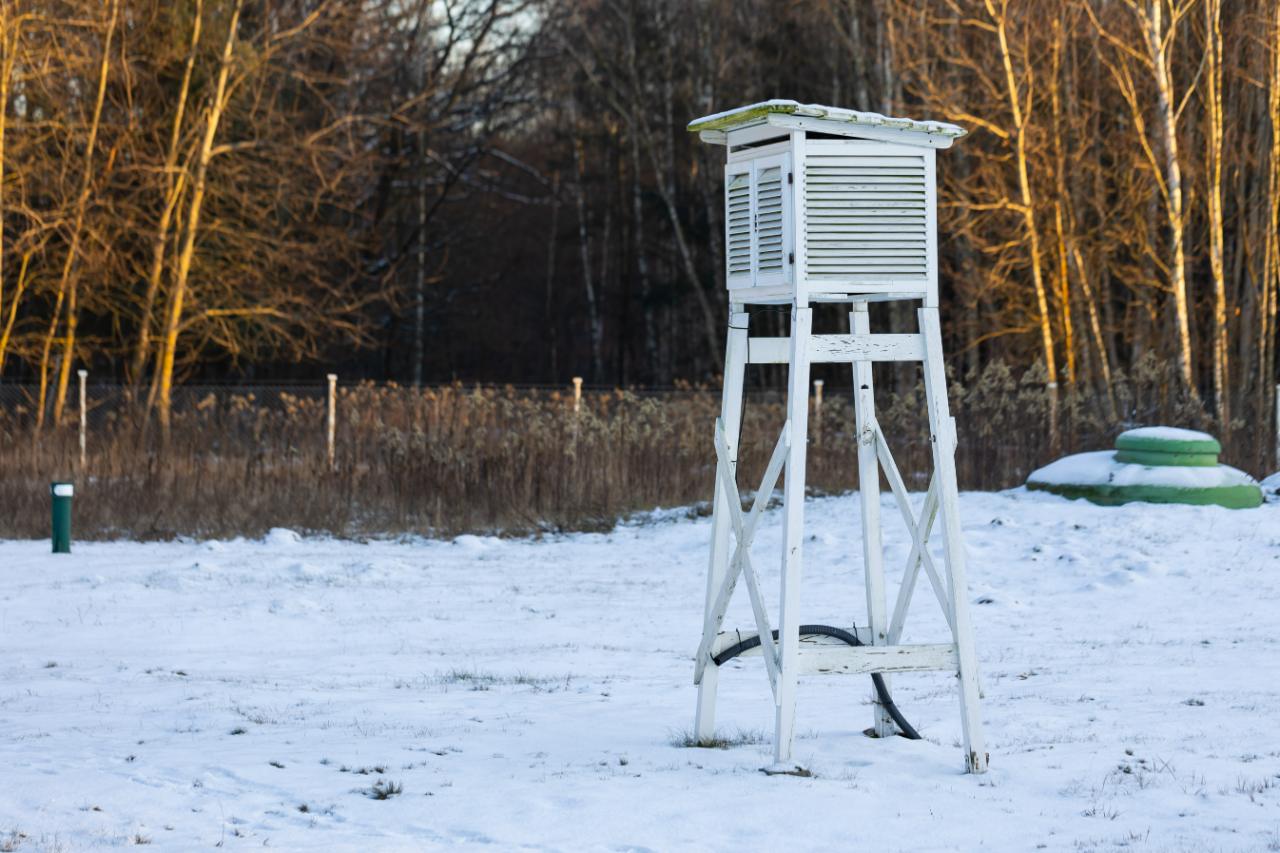
Frost dates aren't forecasts. They're history. NOAA's National Centers for Environmental Information collects daily temperatures from thousands of weather stations across the United States and works out, for each station, how often it has gotten cold enough to matter on each day of the year. The current figures are built from thirty years of records, 1991 to 2020.
That's why your dates come from the nearest station, not your street. A low spot in your yard, a slope, or a south-facing wall can run warmer or colder than the station down the road.
Frost vs. freeze
The weather records count a freeze day as any day the temperature drops to 32°F or below, and a frost day as any day it drops to 36°F or below.
So why pay more attention to frost days, when a freeze is what actually kills tender plants? Because weather stations measure the air about five feet off the ground. On clear, calm, cold nights, the air down at soil level, where your seedlings are, can be several degrees colder than the reading up at the station. A 36°F night at the station can mean frost on your lettuce. Watching the frost dates just builds in that margin.
Spring: your last frost date
In the spring, as temperatures start to warm, the LAST day of the year that a FREEZE DAY occurs is considered the LAST FREEZE DATE for that year. As the temperatures continue to warm, although no more FREEZE DAYS may occur, the LAST day of the year that a FROST DAY occurs is considered the LAST FROST DATE for that year. Usually about a week or two after the LAST FREEZE DATE.
The LAST FROST DATE for your area is the day of the year, based on these 30 year averages, that there is only a 10% chance that there will be a FROST on that day. So, at least statistically, you should be safe to plant ON or AFTER this date.
Fall: your first frost date
In the fall, as temperatures start to cool, the FIRST day of the year that a FROST DAY occurs is considered the FIRST FROST DATE for that year. As the temperatures continue to cool, usually about a week or two later, the FIRST FREEZE DAY of the year will occur.
The FIRST FROST DATE for your area is the day of the year, based on these 30 year averages, that there is a 90% chance that there will be a FROST on that date. So again, at least statistically, you will want to have completed your harvest ON or BEFORE this day.
Playing the odds
However good the statistics, you're still playing the odds with these dates. It's a bit like a trip to Las Vegas, except instead of your money, you're putting your tomato plants up on the blackjack table.
Editor's note: for your own safety, do not attempt this in any gaming establishment.
Plant on or after your last frost date, have your harvest in by your first frost date, and check your local forecast before either. A frost date tells you what usually happens. The forecast tells you what's about to.
Let Bedwork tell you.
Your last and first frost dates sit right on the Bedwork home screen, from the weather station nearest you, with a countdown to the next one.
Opens October 1 Get the app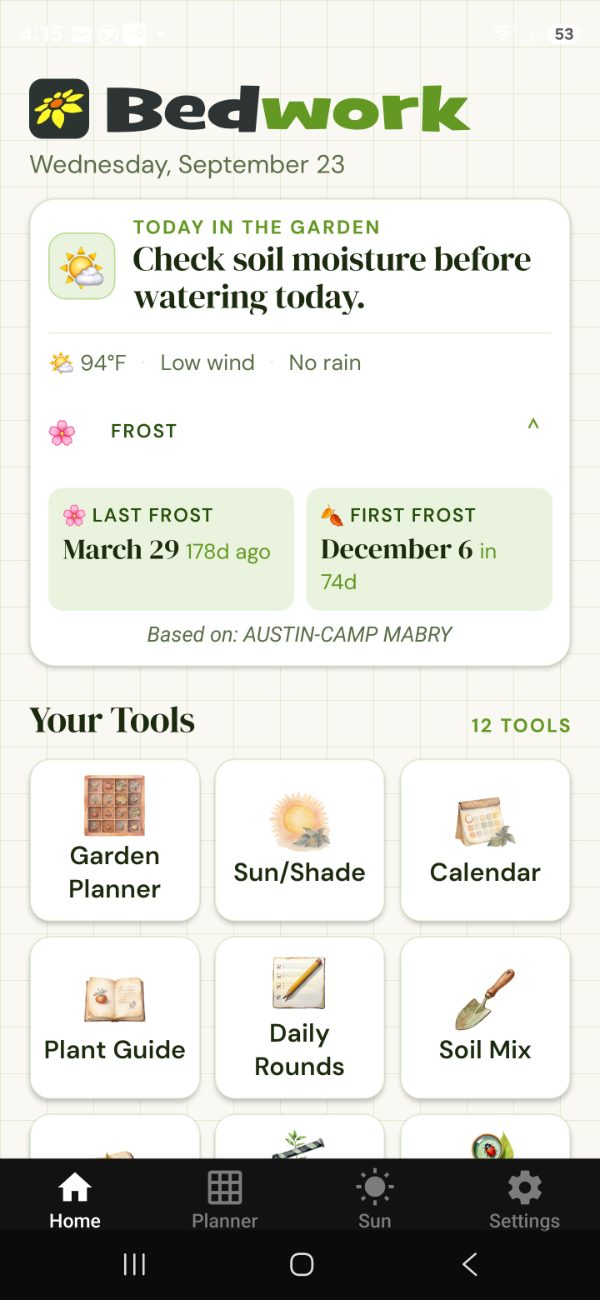
I've been writing about gardening at howdogardener.com since 2011, wrote a weekly gardening column for the Liberty Hill Independent in 2012, and earned my Master Gardener certification the same year. Bedwork is the raised-bed app I always wanted, so I built it.